SRT (Situation Reaction Test) — How to Respond Like a Future Officer
Among the psychological tests in the SSB interview, the Situation Reaction Test (SRT) is one of the most revealing. It assesses how you react under pressure, how quickly you make decisions, and whether you think like a future officer.
In this blog, we’ll cover what the SRT is, why it matters, strategies to improve, and how Provers’ SRT practice module can help you master it.
What is the Situation Reaction Test (SRT)?
The SRT is conducted as part of the psychological testing at the SSB.
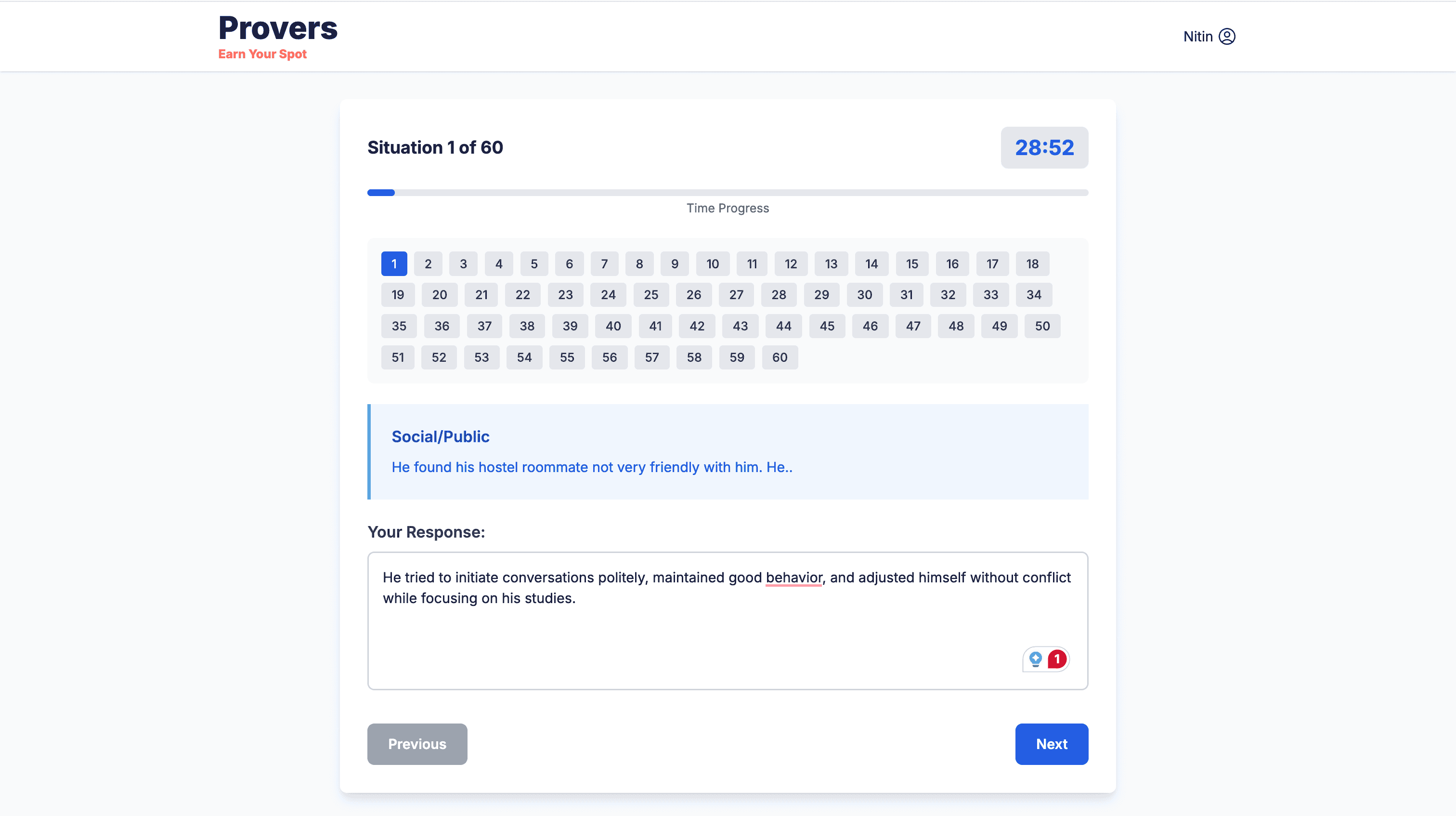
- You are given 60 situations.
- Time limit: 30 minutes (around 30 seconds per situation).
- Each situation describes a real-life challenge, conflict, or responsibility.
- You must write down your immediate reaction in one or two lines.
👉 Example situation: “You are traveling in a train and suddenly a passenger falls unconscious.”
- Weak Response: I will call someone for help.
- Strong Response: I will check the passenger, call for medical help, and assist till recovery.
Why the SRT Matters in the SSB Interview
The SRT gives deep insight into your:
- Decision-making ability under stress.
- Sense of responsibility and courage.
- Empathy towards others.
- Leadership and initiative in challenging situations.
Psychologists analyze whether your responses align with Officer-Like Qualities (OLQs) such as:
- Responsibility
- Courage
- Cooperation
- Practical intelligence
- Quick decision-making
How to Respond Like a Future Officer
To respond effectively in SRT, keep these principles in mind:
-
Stay Calm and Logical – Don’t panic in tough situations. Show clarity of thought.
-
Prioritize Safety and Responsibility – Always safeguard lives and act responsibly.
-
Show Leadership and Initiative – Don’t wait for others — step up to act.
-
Be Realistic Yet Positive – Avoid impractical heroism; solutions should be achievable.
-
Keep It Crisp – One or two lines are enough; don’t waste time writing essays.
Strategies to Master SRT
Here are practical strategies to prepare for SRT:
- Practice in a Timed Environment → Train yourself to respond within 30 seconds.
- Think Action-Oriented → Use verbs and active sentences (e.g., I will…).
- Avoid Leaving Situations Blank → Attempt all 60, even if responses are short.
- Stay Natural → Don’t memorize; your natural responses matter more.
Common Mistakes in SRT (and How to Avoid Them)
❌ Unrealistic Heroism → Jumping in front of a train or fighting 10 criminals single-handedly. ✅ Instead, show practical courage with safety in mind.
❌ Leaving Situations Unanswered → Skipping questions reflects indecision. ✅ Even a short logical response is better than blank.
❌ Overcomplicated Solutions → Writing lengthy stories wastes time. ✅ Stick to clear, actionable responses.
❌ Ignoring Teamwork → Always acting alone. ✅ Show cooperation and leadership.
How Provers Helps You Master SRT
The best way to excel in SRT is realistic practice — and that’s exactly what Provers SRT Module offers.
With Provers, you get:
- Timed practice (30 seconds per situation, like the real test).
- AI-powered evaluation of your responses based on OLQs.
- Default officer-like responses for learning.
- Unlimited practice sets to sharpen decision-making speed.
Instead of practicing aimlessly, Provers helps you build the right mindset to think and respond like an officer.
Final Thoughts
The Situation Reaction Test is not about writing “perfect” answers. It’s about showing that you think like a leader under pressure. With practice, clarity, and a focus on officer-like qualities, you can master the SRT and boost your chances in the SSB interview.
👉 Start practicing today with the Provers SRT Module and train your mind to respond like a future officer.
Related: