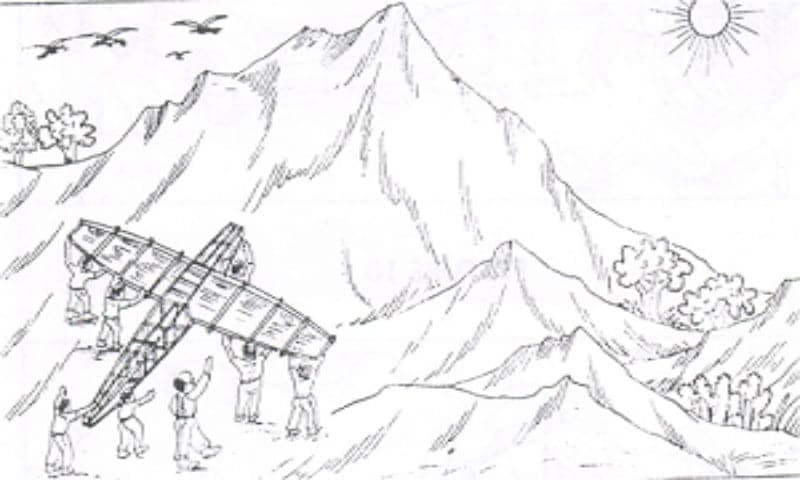
PPDT Story Writing: Tips, Tricks, and Sample Stories
The Picture Perception and Discussion Test (PPDT) is often the first real challenge candidates face in the SSB interview. In those few minutes, you’re expected to observe a picture, build a logical story, and then defend it during a group discussion. Many aspirants lose precious marks here — not because they lack imagination, but because they don’t know how to channel their ideas into a structured, positive story under strict time limits.
In this guide, you’ll learn:
- How PPDT works in the SSB process
- A step-by-step method to write a high-quality story
- Proven tips and tricks from SSB experts
- 3 sample PPDT stories with explanations
- How to practice effectively using Provers’ PPDT module
Understanding PPDT in SSB Interviews
The PPDT is conducted in two stages:
- Story Writing Phase – You are shown a picture (clear, hazy, or ambiguous) for 30 seconds. You then have 4 minutes to write a story around it.
- Group Discussion Phase – You narrate your story to the group and participate in a discussion to arrive at a common story.
Purpose of the test:
- Assess perception, imagination, and decision-making
- Evaluate clarity of thought and communication skills
- Judge your optimism and leadership qualities
Step-by-Step Guide to Writing a PPDT Story
Over the years, I’ve seen that the best PPDT stories follow a simple, logical structure. Here’s a method you can trust:
Step 1: Quick Observation (20–30 sec)
- Identify the number of characters, their gender, and mood.
- Notice the background setting (village, city, school, office, etc.).
Step 2: Identify the Main Character
- Usually, one character is central to the story — this is your hero.
- Assign them an age, occupation, and a relevant skill.
Step 3: Define the Central Problem
- The story must revolve around one main challenge.
- Keep it realistic and relevant to the scene.
Step 4: Build the Storyline
- Start with background: Who is the hero? Where are they?
- Describe the challenge: What problem arises?
- Show action: How does the hero take initiative?
- Conclude with a positive resolution.
Step 5: Keep it Concise
- 4 minutes is short — aim for 80–100 words max.
PPDT Story Writing Tips & Tricks
- ✅ Be positive – End with success or improvement.
- ✅ Show leadership – The hero should take charge.
- ✅ Use realistic actions – Avoid superhuman feats.
- ✅ Manage time – Practice so you can finish comfortably.
- ✅ Neat handwriting – The assessors should read it easily.
Sample PPDT Stories
Story 1
Picture shown: A young man standing near a broken bridge with villagers around.
Ravi, a 23-year-old civil engineering graduate, noticed the bridge connecting two villages had collapsed due to heavy rains. Realizing the villagers were cut off from basic supplies, he immediately contacted local authorities, arranged temporary bamboo walkways with help from locals, and coordinated supply delivery. Within a week, a permanent repair plan was initiated. Why it works: Shows initiative, teamwork, and problem-solving.
Story 2
Picture shown: A group of students looking at a poster on a wall.
Priya, a 21-year-old NCC cadet, saw a poster about a cleanliness drive in her town. She gathered her friends, got permissions from the municipal body, and organized the event. They cleaned the public park, painted benches, and planted trees. Why it works: Demonstrates leadership, social awareness, and action.
Story 3
Picture shown: An elderly man with a worried expression sitting outside a hospital.
Amit, a 25-year-old MBA student, noticed an elderly man unable to get his wife admitted due to lack of funds. Amit spoke to the hospital management, arranged financial aid through a local NGO, and stayed with the man until his wife was admitted. Why it works: Reflects empathy, resourcefulness, and responsibility.
Common Mistakes to Avoid
- ❌ Negative endings – Avoid stories that end in failure.
- ❌ Overcomplicated plots – Simple and clear wins.
- ❌ Character confusion – Don’t add too many people without purpose.
How to Practice for PPDT Story Writing
Just reading about PPDT is not enough — consistent practice is the only way to improve speed and clarity.
The Provers PPDT module is designed exactly for this:
- Realistic picture prompts
- 4-minute timer just like the real test
- Instant AI evaluation highlighting strengths and improvement areas
- Default sample story for every picture so you can compare and learn
If you’re serious about improving, practice daily and review your mistakes — that’s how top SSB candidates prepare.
Final Thoughts
The PPDT can make or break your first impression in the SSB interview. If you can master quick observation, positive storytelling, and clear narration, you’re already ahead of most candidates.
Start today — open the Provers PPDT module, attempt a picture, and see how you perform under real exam conditions. Your selection journey begins with that first practice.
Related: